
“My SUV already has tinted windows. Do I still need window film?” We hear that question regularly. The rear glass looks dark, so it is reasonable to assume the tinting is already taken care of.
The first step is finding out what is actually on the vehicle. Factory privacy glass and applied film can look similar from the parking lot.
Does factory privacy glass need window film?
Your SUV, van or truck may benefit from window film even if its rear windows are already dark. Factory privacy glass and applied film are different. Whether you need both depends on the glass you have, your comfort and visibility needs, and the film you choose. Start by checking what is already there.
Near Peoria? Our free consultation and glass check can help you find out before choosing film.
Jump to: Glass vs. film · Watch the video · What film adds · How dark it gets · Choosing coverage · Free glass check
Factory privacy glass vs. window film: what is the difference?
Many SUVs, vans and trucks have darker glass behind the driver. That factory color is part of the glass itself. Aftermarket window film is applied to the glass, usually on the inside. A window can have both.
| Factory privacy glass | Applied window film |
|---|---|
| Color is built into the glass. | A separate layer is installed on the glass. |
| UV and solar performance depend on the glazing. | Performance depends on the film and existing glass together. |
| The factory color cannot be peeled off. | Applied film can be professionally removed or replaced. |
Factory glass does not automatically lack UV or heat protection. Glass manufacturer AGC describes privacy glass with both solar and UV control. Those properties vary with the glass. Appearance alone cannot tell you how a particular window performs.
Watch: how to tell whether a dark window has film
In this video, Danny shows what to look for along the top edge of a window. The finished installation uses SunTek Carbon XP 35 over factory privacy glass. The customer wanted to add film without choosing the darkest available shade.
- Lower a side window slightly. Look along the top edge from inside the vehicle.
- Look for a film edge. A thin line just below the top of the glass can reveal an applied layer. Look without picking at it.
- Check the paperwork. An installation invoice or warranty may identify the film and which windows were treated.
A close-fitting installation can be difficult to spot, so a smooth-looking edge is not conclusive. If you are unsure, let us inspect it before planning another installation.
A point to keep in mind while watching: factory glass can already provide UV and solar protection. Film adds to the glass you have; it does not necessarily start from zero protection.
What can window film add to glass that is already dark?
Start with the problem you notice. Is sunlight uncomfortable on a passenger’s arm? Is glare the issue? Do you want a different appearance, or are you mainly concerned about UV exposure?
- Solar heat control: compare the film’s solar and infrared performance, not just its shade.
- Glare and appearance: choose how much visible light you want to keep, especially for evening driving.
- UV filtering: compare the existing glass and the exact film specification. A darker appearance does not establish UV protection.
You do not have to choose the darkest film to improve solar performance. SunTek’s automotive specifications list light and dark shades with different visible-light and solar-performance figures. The published results use reference glass; your existing glass affects the finished result.
Our Carbon vs. Ceramic window tint guide explains the performance choices. For UV specifically, see what UV-protection window film does.
How much darker will film make factory privacy glass?
VLT means visible light transmission: how much visible light passes through the window. A lower percentage means less light. Once film is installed, the meter reads the glass and film together.
On a 2026 Tesla Model Y we measured, the rear door privacy glass read 24.0% VLT before film. After we installed SunTek Evolve 5, the same window read 1.4% VLT. That is a substantial change in visible light.
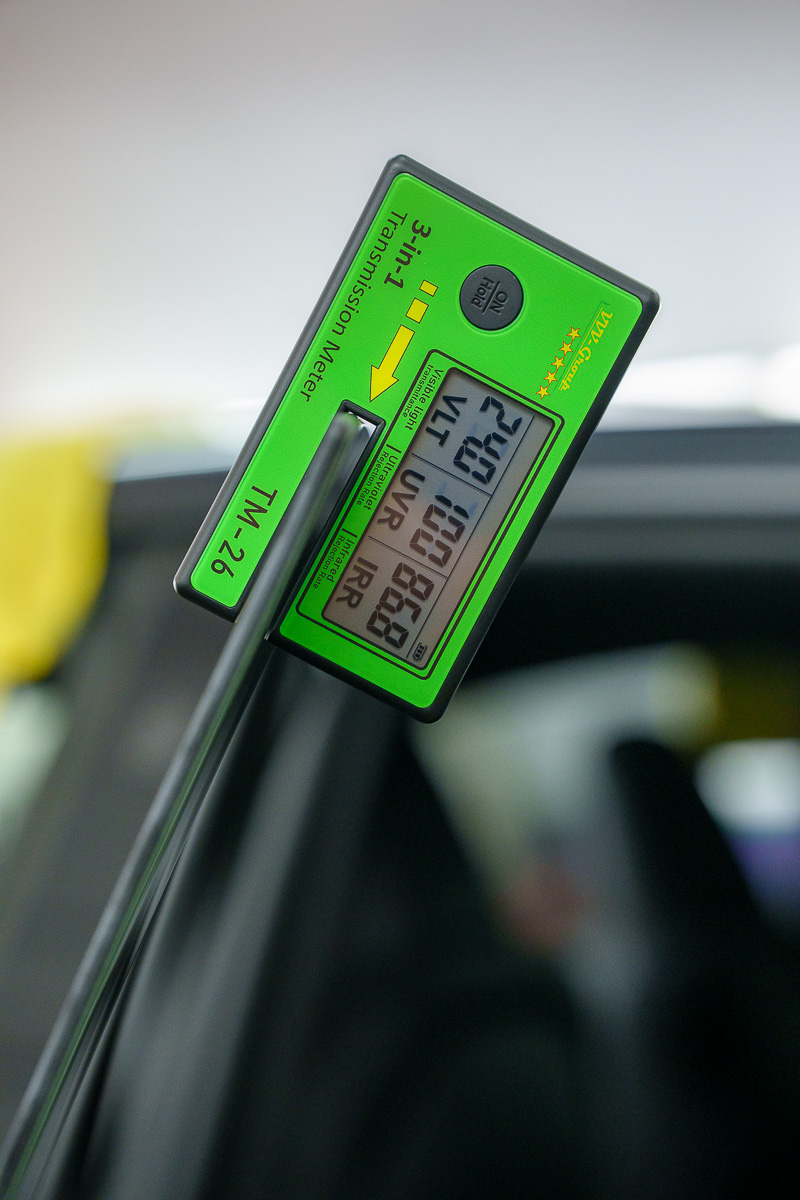
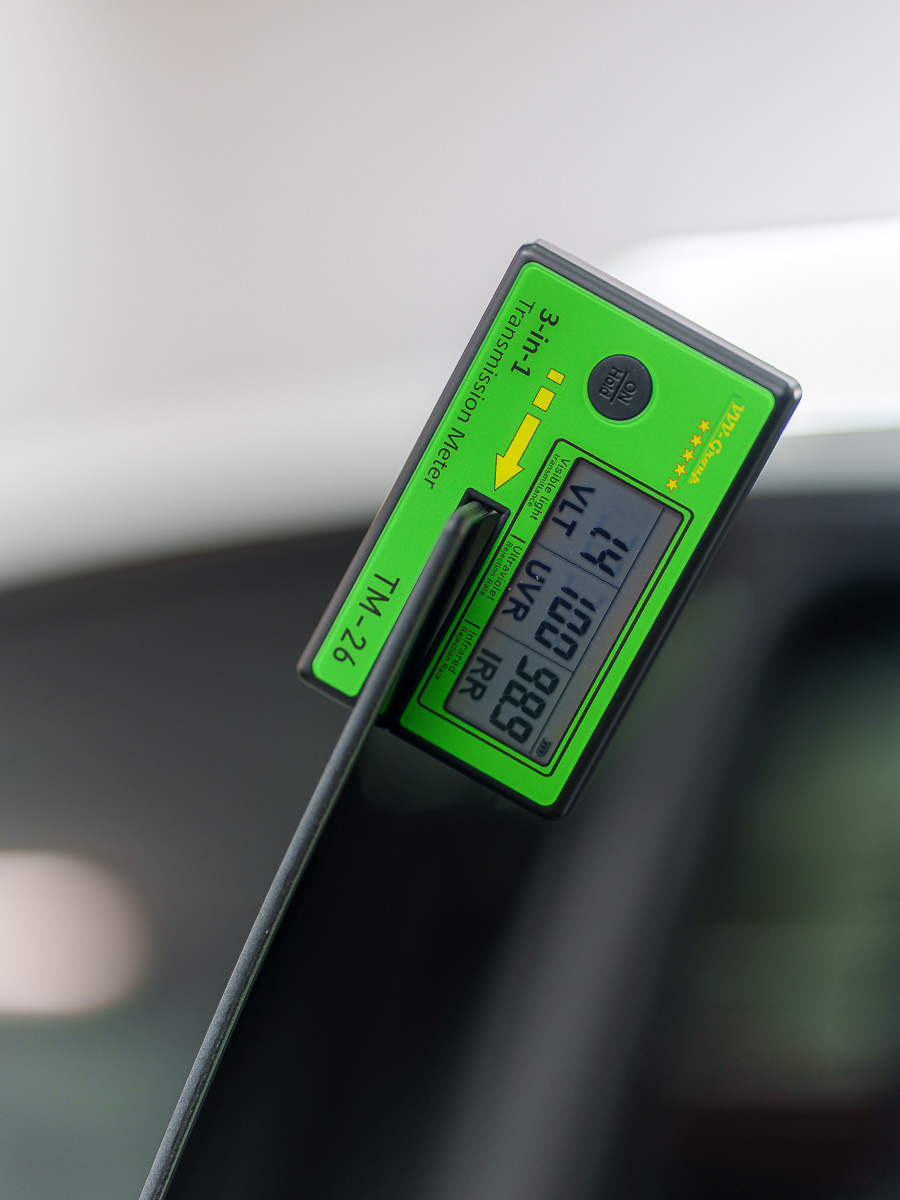
This is a measurement example, not a shade recommendation. The readings belong to that window and installation. The UV and infrared figures on the screen depend on the meter’s test range; they do not measure total solar heat rejection or cabin temperature.
If you already like the darkness of your rear windows, ask about a lighter film with the solar performance you want. Compare the finished view, especially if you drive at night. Adding film cannot make factory privacy glass lighter.
Matching the rear appearance does not automatically make a front-window installation legal. Our window tint laws guide explains how to check the rules for your vehicle and each window.
Choose coverage around the people who ride with you
SUVs and vans: start with the back seat
If you handle school pickups and family trips, look beyond how the vehicle appears from outside. Tell us which seat gets uncomfortable, when direct sun reaches it and whether glare is bothering the person sitting there.
For a child riding beside a rear window, assess that window’s performance. You can compare ways to reduce glare and sun exposure without automatically choosing the darkest film.
Trucks: consider the front and rear separately
Matching the two front windows to darker rear glass is a common appearance goal. Treating the front windows changes those windows; it does not add film to the rear doors or back glass. If passengers regularly ride in the back, include their comfort in the conversation.
You can choose different shades for different windows, or leave windows alone when they already meet your needs. Compare the coverage that addresses your concern with your budget. Our car window tint pricing guide gives you a starting point.
Factory glass and window tint FAQs
Is dealership tint the same as factory privacy glass?
No. Film added by a dealership is a separate installation. Factory privacy glass is part of the original glazing. A vehicle may have factory privacy glass, dealership-applied film, both or neither on a particular window. Check the invoice and the glass.
Can you install film over factory privacy glass?
Yes, suitable automotive film can be installed on factory privacy glass. We first check the glass, whether there is already applied film and the result you want. Installing over factory-colored glass is a different situation from putting another layer over existing window film.
Do I need ceramic film on the rear windows?
Not automatically. Compare the existing glass, your comfort goals, film performance and budget. Our automotive window film options include SunTek Carbon, Carbon XP, CeramicIR and Evolve. We can explain where an upgrade would help and where a simpler option may fit.
Get a free factory-glass check in Peoria
Not sure what is already on your SUV, van or truck? Danny and Adam offer free consultations and glass metering at Aladdins Window Tinting, near 91st Avenue and Cactus Road in Peoria. Bring the vehicle so we can inspect the actual windows.
- Check what you have. We look for existing film and discuss any installation records.
- Explain the readings. We meter the glass and explain what the numbers tell you.
- Compare useful options. We discuss visibility, comfort, coverage and price before you choose a film.
The free check is a starting point, not a laboratory test. VLT tells us about visible light. We explain UV and infrared meter readings separately and use manufacturer specifications to compare film performance.
Call to arrange your free glass check. If you already know what you want tinted, send your year, make and model through our car-tint quote form.
Aladdins Window Tinting · 9192 W Cactus Rd, Suite D, Peoria, AZ 85381 · 623-388-3110