
You want to open the blinds, enjoy the daylight and keep people from looking into your home. Window film can help, but the first question is when you need that privacy: during the day, after dark, or both?
A window that looks reflective from the street at noon can look very different when your living room lights are on at night. Understanding that difference helps you choose a film that fits the way you use the room.
Does privacy window film work at night?
See-through solar window films, including reflective films, do not provide dependable nighttime privacy when it is brighter inside than outside. Keep your blinds or curtains for those evenings. Frosted or opaque window films can address privacy differently, but they also change or block your view through the glass.
Jump to: How lighting changes privacy · Nighttime viewing · Choosing a film · Phoenix front-door project · Checking your windows · FAQs
Why a reflective window looks different at night
The important part is the balance of light on each side of the glass. It is not simply whether the clock says daytime or nighttime.
During the day
When it is much brighter outdoors than indoors, the exterior reflection can dominate what someone outside sees. They may see the sky, landscaping or surrounding buildings reflected in the glass instead of a clear view into the room. A film with a reflective exterior can strengthen that effect.
That does not make every window private throughout the day. A shaded entry, a brightly lit room and a different viewing angle can change what is visible. Check the actual window from the places where people can see it.
After dark
Turn on the interior lights while it is dark outside, and the brighter side is now your room. Someone outside may be able to see in, even though the same window looked like a mirror earlier.
The film has not changed direction or stopped working. Light still passes through it. The lighting conditions have changed, so the exterior reflection no longer hides the interior in the same way.
If you want a clear view through the glass during the day and privacy with the lights on at night, plan on window film together with blinds, curtains or suitable shades.
These three photos show the same window, with the same film, from the same exterior viewpoint. First during daylight with the blinds open, then after dark with the interior lights on, and finally at night with the blinds closed. The film stays the same throughout the comparison.
What “better nighttime viewing” actually means
Some window films are designed to reduce reflections on the room side of the glass. That can make it easier to look outside at night without seeing as much of your room reflected back at you.
For example, Madico describes Optivision Reflective as reducing interior reflectivity for clearer nighttime views. Its privacy benefit is described in terms of daytime conditions.
Better nighttime viewing is about your view looking out. It is not a promise that people outside cannot look in. Lower interior reflection does not make a brightly lit room invisible from the street, and you still need enough light outside to see what is there.
Choose window film around the view you need
We normally call these products window films. Privacy is one reason to install them. Solar control and decorative treatments are others, and a reflective finish is a characteristic of a film. The word “privacy” alone does not tell you how a product will behave.
| Your priority | What to consider |
|---|---|
| Keep the view and improve daytime privacy | A suitable solar film, with blinds or curtains for nighttime privacy. |
| Let light through without a clear view through the glass | A frosted or decorative film selected for the amount of obscuring you need. |
| Block the view through the covered glass | An opaque film, with the loss of the view considered before installation. |
Solar film when you want to keep the view
If you enjoy looking into the yard or seeing who is approaching, a see-through solar film may fit that priority. Compare its appearance and daytime privacy on your glass, then keep a separate way to close off the room after dark.
Choosing the darkest available shade is not a substitute for that nighttime plan. A lower visible light transmission means less visible light passes through; it does not establish that nobody can see into a lit room.
Frosted film when a clear view is the problem
Frosted film obscures the view through the glass rather than relying on a strong exterior reflection to hide the room. That makes it worth considering for a front door, sidelight or bathroom window where you want light and need privacy during both the day and the night.
The tradeoff works both ways: you also lose a clear view out through the treated area. Different frosted finishes and decorative patterns provide different amounts of privacy. Clear portions of a pattern still leave sightlines.
Do not assume every matte or frosted product provides complete concealment. For example, SunTek’s specialty film range distinguishes semi-private matte film from opaque options that block views. Ask to see the actual material on glass and evaluate it with the interior lights on.
Opaque film when blocking the view matters most
An opaque film is another option where you do not need to see through the covered glass. Consider how the selected product will affect daylight and the appearance on both sides. This is a different decision from choosing a darker see-through solar film.
Privacy also is not a measure of UV performance. Our guide to UV protection window film explains that separate part of choosing a film.
A Phoenix front door close to a private road
We recently installed frosted film on a front door in a small private condo community in Phoenix. The home was close to the community’s private road, with roughly 15–20 feet between the street and the door.
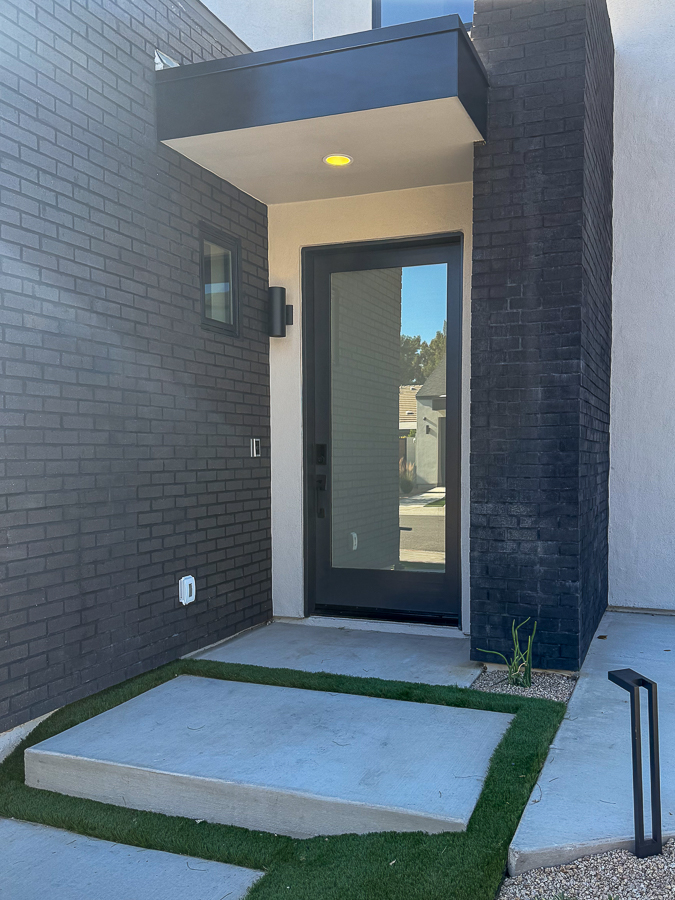
The family had recently moved in and was concerned about people looking through the glass. Neighbors, pedestrians and passing drivers were close enough that the concern extended to both daytime and nighttime.
We installed frosted film on the door glass. A door in that setting presents a different question from a window where preserving a clear view of the yard is the priority.
For a similar entry, decide whether you want to keep seeing through that particular piece of glass. If the answer is no, an obscuring finish may suit the job better than relying on daytime reflection.
For homes in Peoria and Glendale: start with the sightline
Before choosing a shade, look at the window from the sidewalk, driveway or shared walkway that creates the concern. The same checks apply wherever you live:
- Check during the day. Look from the actual viewing distance and angle, including times when the window is shaded.
- Check again after dark. Turn on the lights you normally use and leave the window treatments open for the comparison.
- Decide what you need to hide. A general view into the room, a doorway and an occupied bathroom call for different levels of obscuring.
- Decide what you want to see out. Be specific about the view you would give up with frosted or opaque film.
- Compare a sample and your window treatments. Evaluate the film on the glass where practical. Then check that your blinds or curtains close sufficiently to provide the nighttime privacy you expect.
You do not have to solve every window the same way. A frosted front door and see-through film on a living room window can serve different needs in the same home. If only one door is causing the privacy problem, start there before considering a larger project.
Our residential window tinting service includes discussing your goals and evaluating the glass before recommending a film. Bring up nighttime privacy at the beginning so it is part of the selection.
Window film and nighttime privacy FAQs
Will very dark window film keep people from seeing in at night?
Do not count on darkness alone. Even a dark see-through film can allow a view into a brighter room. Choose the film for the performance and appearance you want, and use suitable window treatments when you need privacy after dark.
Will leaving the porch light on create nighttime privacy?
Exterior lighting can change what is reflected, but one porch light does not establish privacy across every window and viewing angle. Check what is actually visible and use a covering or an appropriate obscuring film when privacy matters.
Can I cover only part of a window or door?
Partial coverage is an option, but untreated glass and clear areas in a decorative pattern remain possible sightlines. Check standing and seated views from both sides before choosing where the obscuring film should start and stop.
Does frosted film mean I can remove the blinds?
That depends on the product and the level of privacy you need. Evaluate the exact finish with the room lights on before removing an existing covering. Some decorative films provide only partial obscuring, and blinds may still be useful for light control.
Let’s look at the windows you want to make more private
Tell us which room or door is the concern, when people can see in, and whether you want to keep the view out. We can help you compare window films and decide where blinds or curtains still belong in the plan.